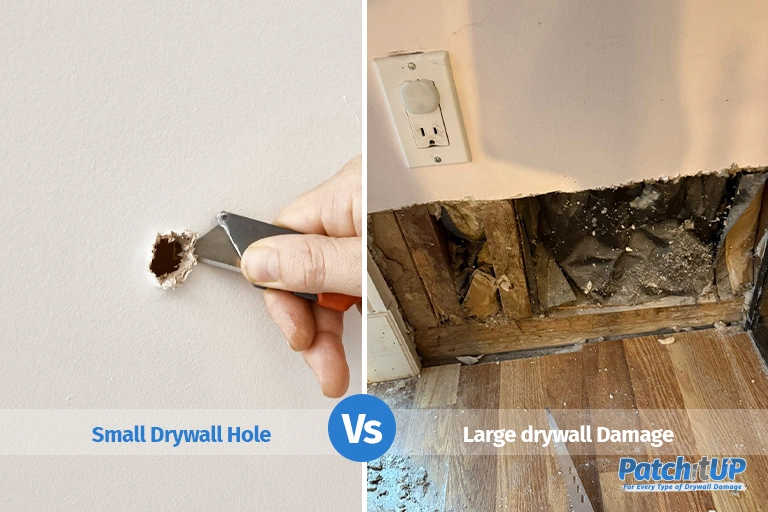
Not all wall damage is the same. A small nail hole and a sagging, water-stained ceiling may both count as drywall damage, but they call for very different solutions. Knowing which one you are dealing with saves you time, money, and the frustration of fixing the same spot twice. If you are considering drywall repair in Nassau County, this guide explains when a simple patch is enough and when it is time to call a professional.
What Counts as a Small Drywall Hole?
Small holes are shallow and limited to the wall surface. They are usually three inches across or less, with no pipes, wiring, or insulation exposed behind them. Common causes include:
- Nail or screw holes from picture frames and shelves
- Dents from a door handle striking the wall
- Marks left by furniture
- Empty anchor holes from fixtures you have removed
Repairs like these are straightforward. A little spackle, light sanding, and a coat of matching paint are usually all it takes. For the cleanest result, keep the leftover paint from when the room was first painted, so the patch blends in without any visible difference.
What Is Large Drywall Damage?
Large damage goes beyond the surface and often points to a problem inside the wall. The size of the hole matters less than what caused it and what may be hidden behind it. The most common signs of serious drywall damage include:
- Holes larger than four to six inches.
- Drywall that is stained, sagging, or soft to the touch.
- Cracks spreading from corners or across the ceiling.
- Exposed framing or wiring .
- A damp, musty smell or visible mold .
Damage like this needs a proper repair rather than a quick patch. Painting over a water stain only hides the symptom, while the underlying problem continues to spread behind the wall.
Should You Repair It Yourself or Call a Professional?
The right choice depends on the size and cause of the damage. A small, dry hole with a solid wall around it and nothing structural exposed is usually a safe DIY job, needing only a patch kit and a few basic tools .
Call a professional when the drywall feels soft or crumbly, you notice mold or a musty odor, cracks on the walls, or the damage shows up in many spots. These signs usually mean moisture or structural issues that need proper diagnosis. If you are unsure, send a photo to a local repair team for a quick answer before you begin.
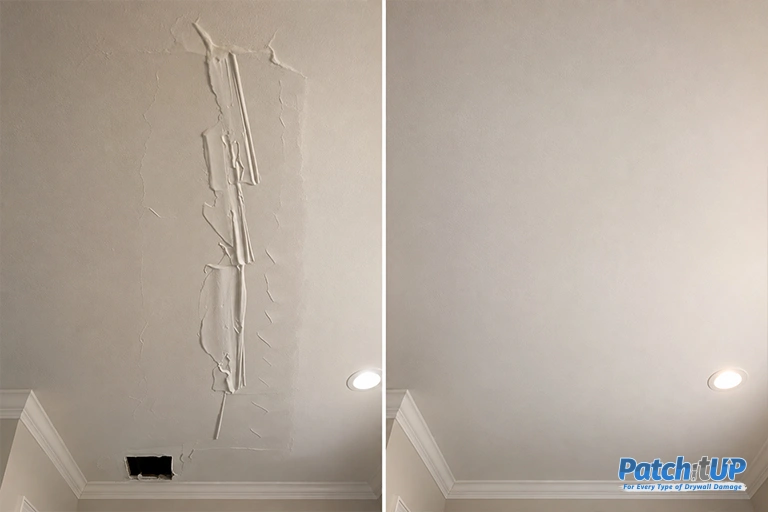
Work done by Unprofessional VS. Work done by Professionals
How Much Does Drywall Repair in Nassau County Cost?
There is no single price for drywall repair, because the cost depends on how extensive the damage is. As a general guide, most repairs fall into the following ranges:
- Small holes: $60 to $150+
- Larger holes and patches: $200 to $800+
- Water or framing repairs: $500 to $2500+
The most accurate estimate always comes from an in-person assessment, since the full scope of the work is often hidden behind the wall.
Why Nassau County Homes Need Extra Care ?
Homes across Nassau County face a few local challenges that make drywall damage more common. Many of our houses trace their roots back to the iconic post-war Levittown era, and older walls tend to settle over time, which leads to cracks, nail pops, and separating seams.
The area’s coastal location adds another factor. Sitting between the Long Island Sound and the South Shore, the region stays humid for much of the year, and homes near the water in Long Beach, Freeport, and Oyster Bay are especially prone to moisture. Basements and exterior walls are usually affected first. As a result, a small area of damage can quietly develop into a larger moisture or mold problem if the wall behind it is not inspected.
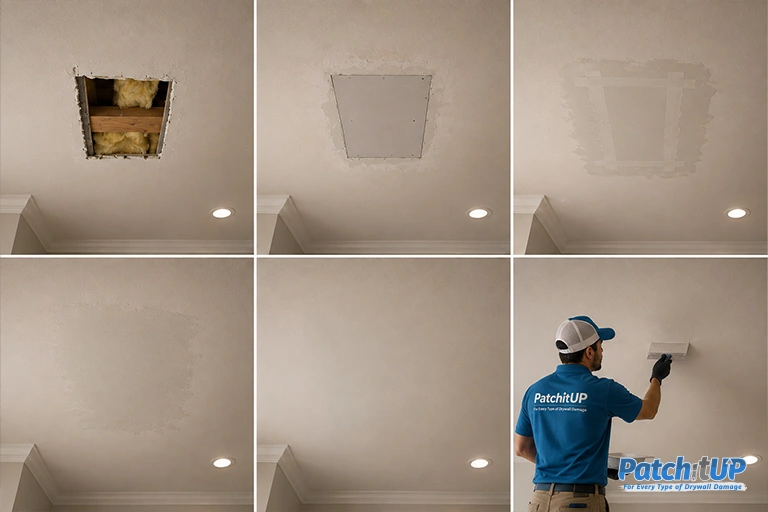
Trust Your Walls to PatchitUP
PatchitUP understands that every drywall repair is different. Whether it is a small hole, crack, or moisture damage, our team focuses on providing clean repairs that match your existing walls. Homeowners across Nassau County trust us for reliable service and quality work that lasts. Call PatchitUP of Nassau County at (516) 373-6765 or schedule an appointment.
Final Thought
Ignoring drywall damage today can lead to bigger repairs and higher costs tomorrow. Taking care of cracks, holes, or water-damaged drywall as soon as they appear helps protect your home’s appearance, structural integrity, and long-term value. If you are looking for reliable drywall repair in Nassau County, PatchitUP is here to provide professional artistry, lasting results, and a hassle-free repair experience from start to finish.
Frequently Asked Questions
Can I repair a large drywall hole myself?
It is possible, but holes larger than four to six inches need a backing board, tape, several coats of compound, and texture matching to look right. For large holes, or any water or mold damage, a professional gives a cleaner, longer-lasting result.
How can I tell if a drywall damage is serious ?
Press gently on the area. If it feels soft or crumbly, moisture has likely gotten behind it. Sagging, spreading cracks, exposed framing, and a musty smell are also signs the damage runs deeper than the surface.
How much does a drywall repair cost?
It depends on the size of the damage and whether water or mold is involved. Small holes are inexpensive, while larger or moisture-related repairs cost more, so an in-person assessment gives the most accurate price.
Is water-damaged drywall always expensive to repair?
Not always, but it is never just a patch. The source of the moisture has to be found, and mold ruled out first, which is why water damage usually needs a professional.
How long does a drywall repair take?
A small hole can be done in an afternoon, allowing for drying time between coats. Larger repairs with replacement or texture matching usually take one to three days.
Does PatchitUP serve my area?
Yes. PatchitUP handles drywall and plaster repair across Nassau County, from the North Shore to the South Shore. Call or find your nearest location to confirm coverage and book a visit.