


Drywall water damage is a common issue for homeowners in West Houston, driven by heavy rainfall, sudden storms, plumbing issues, and high humidity. Drywall is not water-resistant, so even a small leak can weaken it over time. If water damage is ignored, it can spread quickly and lead to structural issues, mold growth, and higher repair costs. Understanding how drywall water damage happens and how it is repaired helps homeowners take action early.
Common Causes of Drywall Water Damage
Water damage to drywall can come from many sources. Plumbing leaks inside walls, under sinks, or behind appliances are some of the most common causes. Roof leaks during storms can allow water to drip into ceilings and walls. Poor drainage, clogged gutters, and foundation cracks can let rainwater enter the home. In West Houston, high humidity and air conditioning issues, such as clogged drain lines or condensation buildup, can also slowly damage drywall over time.
Signs of Water-Damaged Drywall
Drywall affected by water usually shows visible warning signs. These include yellow or brown stains, bubbling or peeling paint, sagging ceilings, warped walls, and soft or crumbly areas. In some cases, nails or screws may pop out of the wall. A persistent musty smell often indicates moisture trapped behind the drywall, which can lead to mold growth if not addressed quickly.
Why Immediate Repair Matters
Water-damaged drywall does not regain strength once it gets wet. Moisture can spread into insulation, wooden framing, and nearby rooms, making the damage worse. Mold can begin to grow within 24 to 48 hours, especially in humid areas like West Houston. Prompt repairs help prevent health risks, protect the structure of the home, and keep repair costs from increasing.
Drywall Water Damage Repair Process
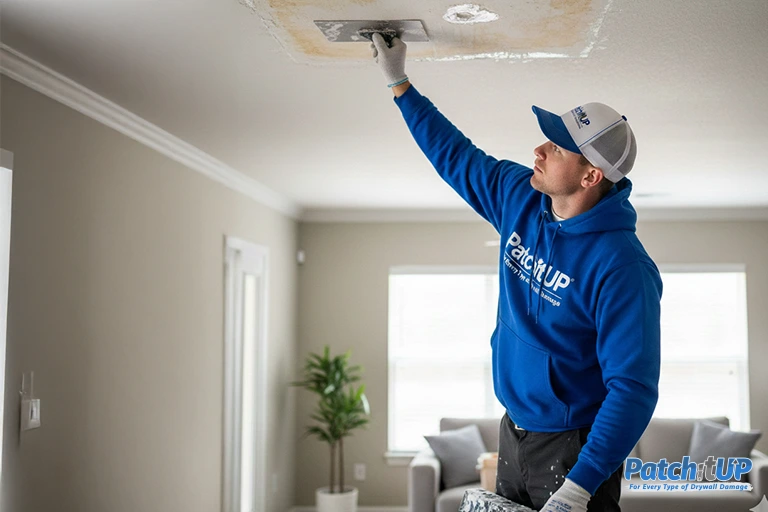
Repair begins by identifying and fixing the source of the water, whether it is a plumbing leak, roof issue, or drainage problem. The affected area is then dried using proper drying equipment. If the drywall is swollen, soft, or moldy, it must be removed. New drywall is installed, taped, mudded, sanded, and painted to match the surrounding area. The goal is to restore the wall or ceiling so it looks and functions like new.
Repair vs. Replacement
Minor water damage, such as light staining from a short-term leak, can sometimes be repaired without replacing the drywall. This may involve drying the area, applying a stain-blocking primer, and repainting. However, drywall that feels soft, shows mold, or has been wet for a long time usually needs to be replaced. A professional assessment helps determine the safest and most effective solution.
Cost of Drywall Water Damage Repair
The cost of drywall water damage repair depends on the size of the damaged area and how severe the damage is. Small repairs may cost a few hundred dollars, while larger repairs involving ceilings, multiple walls, or hidden damage can cost several thousand dollars. Additional work such as mold removal, insulation replacement, or electrical repairs can increase the total cost.
Preventing Future Drywall Water Damage
Homeowners can reduce the risk of water damage by checking for plumbing leaks regularly and fixing them early. Keeping the roof in good condition and cleaning gutters helps prevent rainwater from entering the home. Proper grading and drainage around the foundation are also important. Managing indoor humidity and maintaining air conditioning systems can protect drywall in West Houston’s humid climate.
When to Call a Professional
If you notice ongoing water stains, soft drywall, sagging ceilings, or mold smells, it is best to contact a professional right away. Water damage is often hidden behind walls and can spread without being visible. Professionals have the tools to detect moisture, dry the area properly, and complete safe, long-lasting repairs.
Final Thoughts
Drywall water damage is a serious concern for West Houston homeowners, but early action can prevent major problems. Understanding the causes, signs, and repair process helps protect your home from long-term damage. Proper drywall water damage repair keeps your walls strong, your indoor air clean, and your home safe and comfortable.
FAQ for Drywall Water Damage Repair
How to test drywall for damage?
Look for stains, soft spots, bubbling paint, or sagging areas, and gently press the wall to check if it feels weak.
What to do if water gets behind drywall?
A. Stop the water source, dry the area quickly, and call a professional to check for hidden moisture or mold.
How do you repair drywall after water damage?
A. Dry the area, remove damaged drywall if needed, install new drywall, then tape, sand, and repaint.
How to know if the drywall needs to be replaced after damage?
A. Drywall needs replacement if it feels soft, crumbles, sags, or shows mold growth.
