After a home renovation or wall repair project, many homeowners expect the cleanup to be finished once the work is done. But weeks later, they may still notice fine white dust collecting on furniture, floors, vents, and shelves. This lingering mess is usually drywall dust, and it can continue spreading through the home long after the repair work is complete.
While drywall work is common during remodeling and repairs, proper cleanup and dust containment are just as important as the repair itself. Professional contractors understand that controlling dust is a major part of delivering quality work. Our experts from PatchitUP focus not only on repairing walls and ceilings but also on helping homeowners minimize the mess that often comes with drywall projects.
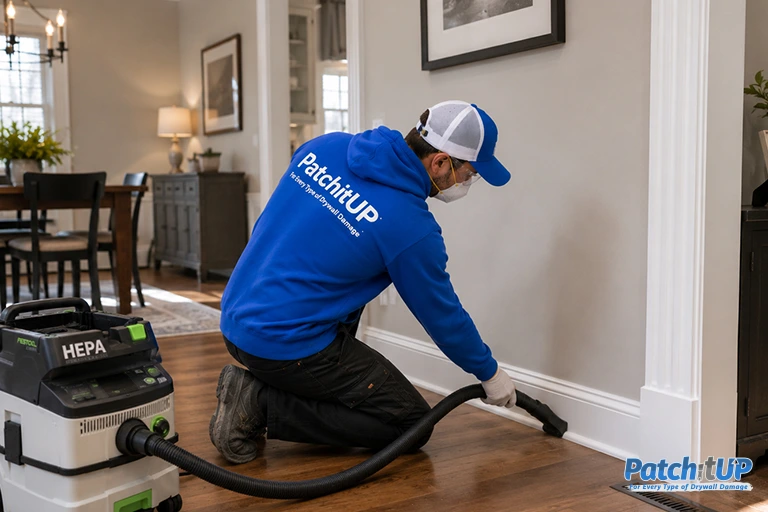
Why Drywall Dust Keeps Appearing
Many people are surprised by how long drywall dust can linger. Unlike regular dirt, drywall dust is extremely fine and lightweight. It easily spreads through the air and settles in hidden areas around the home.
Common places where drywall dust collects include:
- Air vents and HVAC systems
- Carpet fibers
- Curtains and upholstery
- Ceiling fans
- Baseboards and corners
- Inside cabinets and closets
Even after vacuuming and wiping surfaces, dust can continue circulating if it was not properly contained during the repair process.
What Is Drywall Dust Made Of?
Drywall dust mainly comes from sanding drywall joint compound. It often contains:
- Gypsum particles
- Silica
- Paint residue
- Fine construction debris
Because the particles are so small, they can stay airborne for hours and travel into rooms far away from the actual work area.
This is why professional drywall repair services take extra steps to prevent dust from spreading throughout the house.
Why DIY Dust Control Often Fails
Homeowners doing DIY drywall repairs often underestimate how difficult dust control can be. Basic plastic sheets or household vacuums may not fully stop the spread of fine particles.
Common mistakes include:
- Using regular vacuums without HEPA filters
- Leaving vents uncovered
- Sanding without dust barriers
- Sweeping dust into the air
- Failing to seal doorways properly
Once drywall dust enters the HVAC system, it can continue recirculating for weeks.
Our professional teams at PatchitUP use better containment methods that help reduce cleanup problems after the project is finished.
How Professionals Contain Drywall Dust Better
1. Sealing Off the Work Area
One of the most effective methods is isolating the repair area completely. Professionals use:
- Heavy plastic barriers
- Zip walls
- Sealed doorways
- Floor protection coverings
This prevents dust from traveling into nearby rooms during sanding and repairs.
2. Using HEPA Vacuum Systems
Professional drywall contractors often use sanders connected to HEPA vacuum systems. These vacuums capture very fine particles before they spread into the air.
HEPA filtration is important because standard household vacuums may actually blow fine drywall dust back into the room.
3. Covering HVAC Vents
Heating and cooling systems can spread drywall dust throughout the entire home. Pros usually:
- Cover air vents
- Shut down nearby HVAC airflow
- Clean surrounding vent areas after repairs
This helps prevent dust from circulating long after the project is complete.
4. Wet Sanding Techniques
In some situations, professionals use wet sanding methods to reduce airborne dust. Wet sanding creates less floating debris compared to dry sanding.
This method is especially useful for smaller drywall patch repairs.
5. Thorough Post-Repair Cleanup
A professional cleanup process includes more than simple sweeping. Proper cleanup often involves:
- HEPA vacuuming
- Damp wiping surfaces
- Cleaning trim and baseboards
- Dusting vents and fans
- Inspecting hidden areas
Professionals from PatchitUP understand that homeowners want clean living spaces after repairs, not weeks of ongoing dust problems.
Health Problems Linked to Drywall Dust
Too much exposure to construction dust and drywall particles can irritate the:
- Eyes
- Nose
- Throat
- Lungs
People with allergies, asthma, or breathing conditions may notice symptoms becoming worse after drywall work.
Common symptoms include:
- Sneezing
- Dry throat
- Coughing
- Watery eyes
- Breathing discomfort
This is another reason professional dust containment matters during home repairs.
Signs Your Drywall Dust Was Not Properly Contained
You may have a dust containment issue if:
- White dust keeps reappearing after cleaning
- Air vents release dust when the HVAC runs
- Furniture feels dusty every day
- Rooms far from the repair area are affected
- Dust appears inside drawers or cabinets
These signs usually indicate that fine particles spread through the home during sanding.
How Homeowners Can Reduce Lingering Drywall Dust
If drywall dust is still appearing weeks later, these steps may help:
- Replace HVAC air filters
- Use a HEPA vacuum
- Damp mop hard floors
- Wipe surfaces with microfiber cloths
- Clean vents and ceiling fans
- Wash curtains and fabrics
However, severe dust problems may require professional deep cleaning.
Why Hiring Professionals Makes a Difference
Many homeowners focus only on the wall repair itself, but experienced contractors know that cleanup quality is equally important. Professional drywall companies use specialized tools and methods designed to minimize airborne dust from the beginning.
Working with experts from PatchitUP can help homeowners avoid ongoing cleanup frustrations while ensuring drywall repairs are completed properly and cleanly.
Final Thoughts
Lingering drywall dust is a common problem after home repairs, especially when proper containment methods are not used. Because the particles are extremely fine, they can continue circulating through the home for weeks if they enter carpets, vents, or HVAC systems.
Professional drywall repair teams use improved containment strategies, HEPA filtration systems, sealed workspaces, and detailed cleanup methods to reduce dust spread. Whether you are dealing with a small wall patch or a larger renovation project, choosing experienced professionals like PatchitUP can help keep your home cleaner, safer, and far less stressful during the repair process.
FAQ for Drywall Dust Still Showing Up Weeks Later? Here’s How Pros Contain the Mess Better:
How to keep drywall dust contained?
Use plastic barriers, cover vents, seal doorways, and use a HEPA vacuum during sanding and cleanup.
How long to wait for drywall dust to settle?
Most drywall dust settles within a few hours, but fine particles can stay in the air longer.
Drywall repair can be very dusty, especially during sanding, but proper containment reduces the mess.
What’s the best way to get drywall dust up?
Use a HEPA vacuum, damp microfiber cloths, and mop floors instead of sweeping.