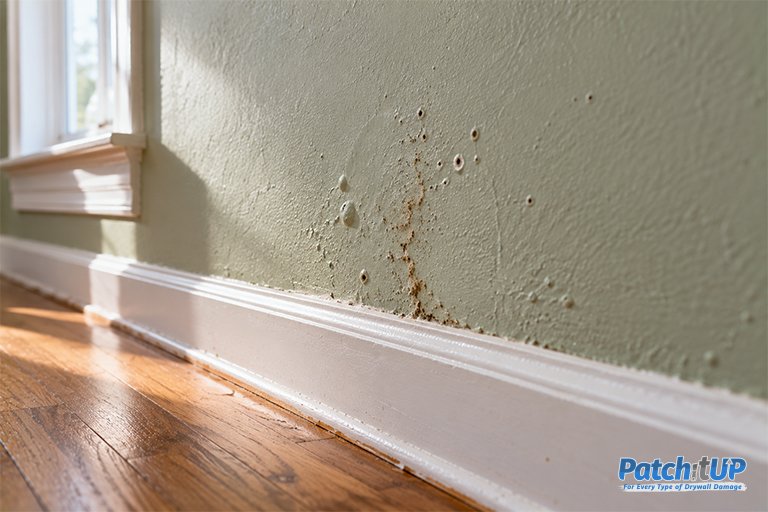
Termite damage in drywall usually first shows up as bubbling paint, a few tiny pinholes, or a thin line of dried mud running up the wall. In Charlotte, call a licensed pest control company before patching. Patch only after the termites have been treated and the framing has been checked.
Termite damage in drywall is easy to mistake for a paint problem. You might see a blister at the baseboard or a crack that wasn’t there last spring, and it will look nothing like termite damage. Here’s what to look for and what to fix first.
What does termite damage to drywall look like?
Termites eat the paper face of the drywall, not the gypsum. The problem will be evident on the surface long before the wall actually starts to go soft.
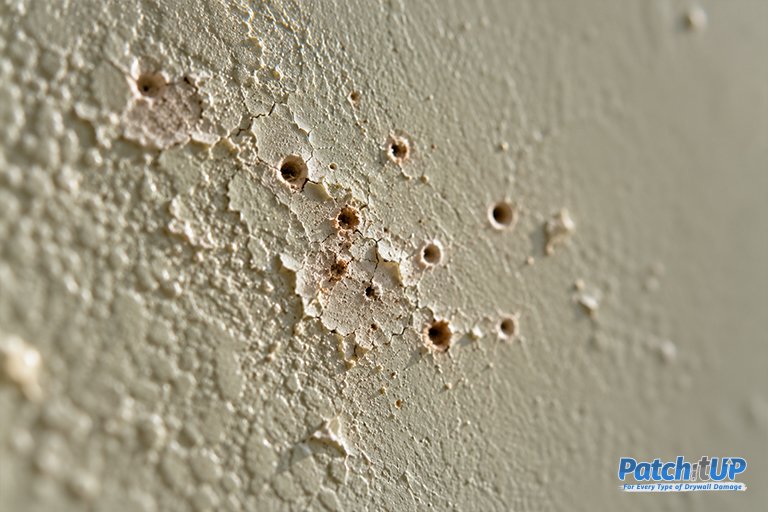
- Wall signs in Charlotte:
- Extremely small holes, really pinhole-sized (no bigger than the end of a pencil eraser), occasionally in clusters.
- Flaking paint or bubbles, with no water damage.
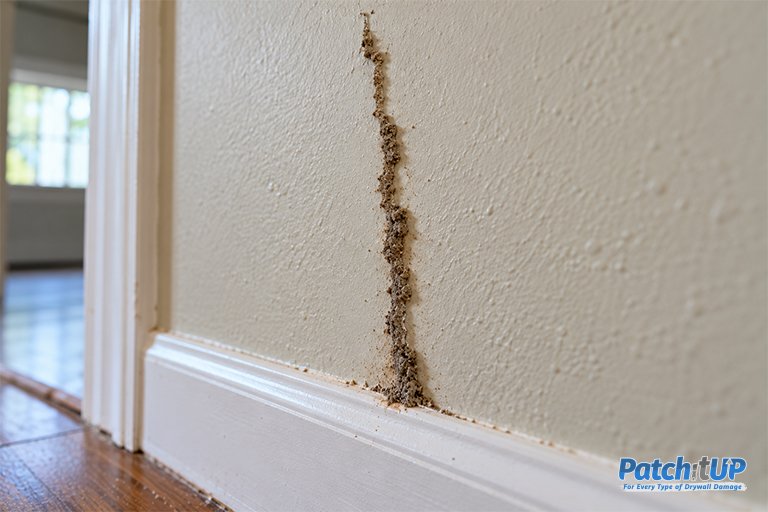
- Very thin mud marks up the walls and along the ceiling edges.
- The wall sounds quite hollow when you tap it at the bottom boards.
- Dents result from the paper being eaten away underneath.
The NC State Extension guide to Eastern subterranean termites offers another clue: damaged material often has a very thin, gritty grey-brown film where termites have fed.
If you see mud lines or pinholes with no water source, then think termites before you think paint.
Why do Charlotte homes get termites in the walls?
Termites are by far the most common pest in NC. NC State Extension states that NC homeowners are likely to have termites at some point. They live in the soil and use mud tubes to get to the wood or paper in the house. The tubes let them crawl through cracks in the walls, through drywall, and even through insulation to reach the ceiling.
Timing is absolutely critical. The termite swarming season starts in late winter and runs through September or October. If you see winged termites flying in the house, you definitely have a termite infestation somewhere in the house. Walls with high moisture content are more likely to have termite activity in the drywall. Check out our blog post onhumidity damage in Charlotte drywall moisture-damaged drywall in Charlotte.
Is it termites, water damage, or something else?
Termite damage in drywall can manifest as a moisture problem. This is a quick check to help you sort it out before calling anyone.
| Bubbling paint | No leak nearby, near baseboards | Below a bathroom, window, or roof leak |
| Small holes | Pinholes in clusters | Old nail or anchor holes in a line |
| Lines on the wall | Raised, gritty mud tracks | Straight crack along a tape seam |
| Soft or sagging spot | Paper eaten away, board feels hollow | Board feels damp or stained |
Don’t scrape the mud lines off or spray them with store-bought insecticide. Leave them for the inspector, as they show precisely where the colony is moving.
Should you repair the drywall before or after the termite treatment?
After, patching the termite damage in the drywall before treatment just masks the problem and gives the termites another fresh ‘sheet’ of paper to eat.
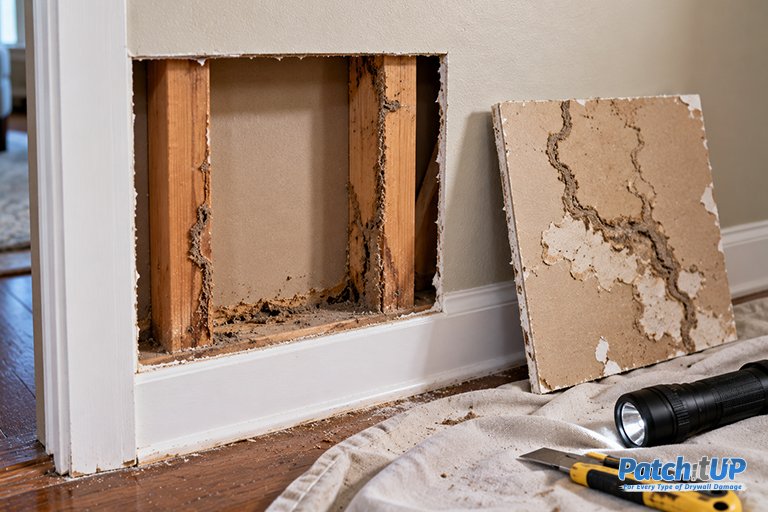
The right order looks like this:
- A licensed pest control company will inspect and treat the property.
- Don’t open any walls until the pest company gives the all-clear.
- Check the framing. If the studs are soft or hollow, then you need a carpenter first.
- Replace the damaged drywall and any insulation the termites have tunneled through.
- Match the texture and the paint so the repair is completely invisible.
Replacing the damaged board is generally the easier option than patching it. You’ll invariably see the repair in the paint, and our guide to paint-matching costs after drywall repair in Charlotte explains why.
Treatment first, framing second, drywall last.
The bottom line
Termite damage in drywall is just the symptom. You have to treat the termites, inspect the framing, and then rebuild the wall.
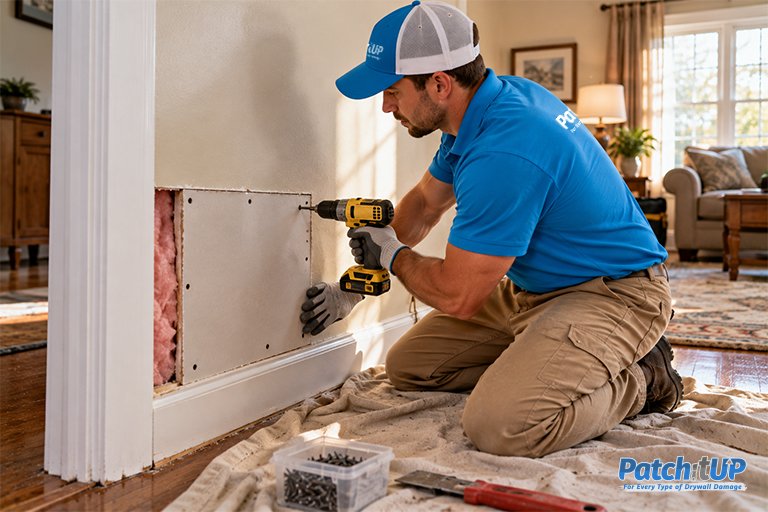
Once the pest work is done, get a free estimate from PatchitUP’s drywall repair crew in Charlotte, NC, or call (704) 255-4154.
Frequently asked questions
Can termites eat through drywall?
They eat the paper on both sides of the board rather than the gypsum itself, which can deteriorate the panel, causing pinholes and sagging. They can also tunnel through the wall cavity to reach the wood framing.
What does termite damage in drywall look like?
Typically, you’ll see small clusters of holes, bubbling paint, thin mud-like joints on the wall, or a section that sounds hollow when you knock on it. Homeowners often confuse the early signs of termite damage in drywall with a paint or moisture problem.
Should we fix the drywall before or after the termite treatment?
First, have a licensed pest control company treat the house, have the framing checked, and then replace the damaged drywall. Don’t patch it until that’s done, or you’ll just be concealing an active infestation.
Does your home insurance cover termite damage?
It wouldn’t normally be. Most policies would see termite damage as a maintenance issue rather than as sudden damage. Check your own policy and any termite bond you may have with your pest control company.
Why PatchitUP of Charlotte handles drywall repair after termites
PatchitUP in Charlotte does drywall, plaster, and paint repair throughout Central, East, North, and South Charlot,e as well as Huntersville. Once your pest company gives the go-ahead, we will repair the drywall for termite damage by moving the damaged board, replacing the insulation the termites tunneled through, and matching your texture and paint.