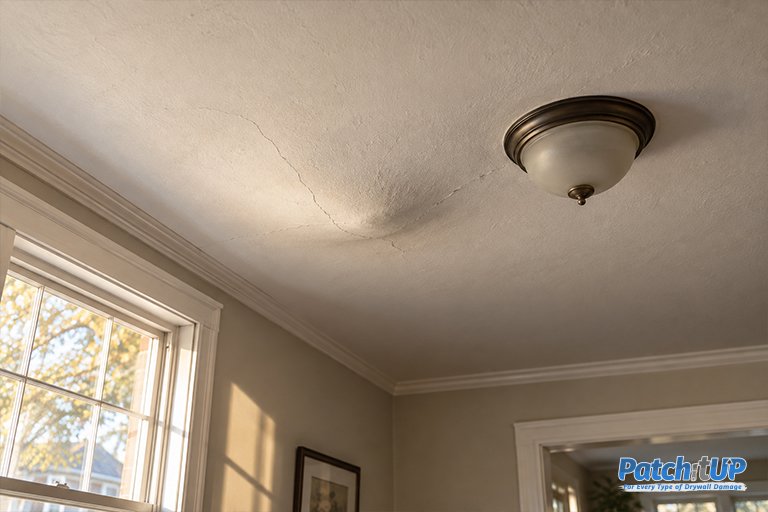
If you see a soft bulge, web of cracks, or ring of coffee color that refuses to disappear despite a fresh coat of paint on your bungalow’s ceiling, plaster repair is exactly what you are looking for. In any construction, ceilings have always relied on plaster to support their weight against gravity. The failure here occurs suddenly. Find out what your ceiling looks like and what an honest repair requires.
Why do plaster ceilings sag?
If your home was built before 1950, the ceiling was not constructed using drywall technology. Wet plaster was pushed through gaps in the thin wooden strips called lath. The material seeped through, settled on top of and behind the strip, and dried, forming a ridge that was the ceiling’s key supporting element.
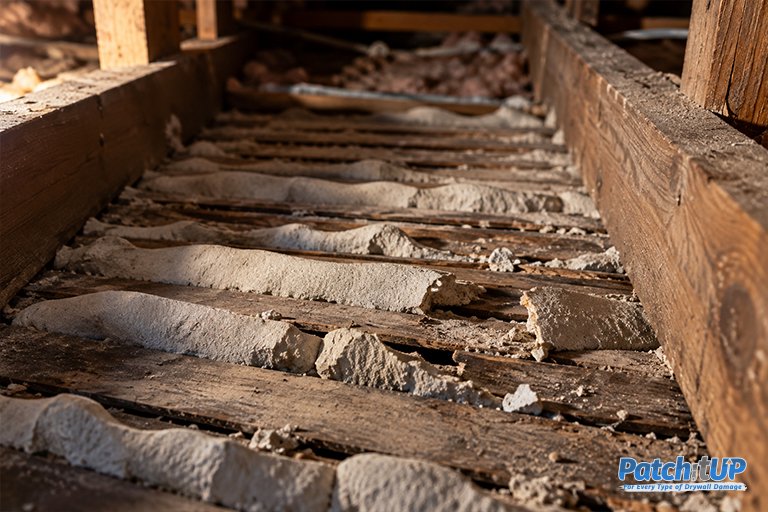
According to the National Park Service, keys break because of moisture problems, insufficient plaster strength, or too heavy a load above. Wooden lath also expands and contracts with humidity, which is why the same hairline crack appears year after year. The ceiling is not attached; it hangs there with the help of fragile keys.
Which warning signs require immediate plaster repair?
Some ceilings might hold until next season, but the following ones cannot:
• Bulge, dip, or shadow noticeable from the doorways
• Flexible or spongy ceiling under light touch
• Cracks spreading in a fan from one point rather than forming a straight line
• Dust or small fragments appearing on the floor and furniture
• Stains reappearing after painting
Here’s the test we conduct on site. Gently press your palm to the ceiling without leaning on it. If there is even the slightest movement, the keys behind it are broken. Remove your palm and move away. Movement means that the keys have failed, and failed keys cannot be repaired.
Can a sagging ceiling be saved, or does it all come down?
Often it can be saved. Plaster that’s loose but still solid gets eased back up and screwed into the joists using plaster washers, wide flat discs that spread the load so the screw head doesn’t punch straight through the old surface. The National Park Service describes this same reattachment method for historic ceilings.
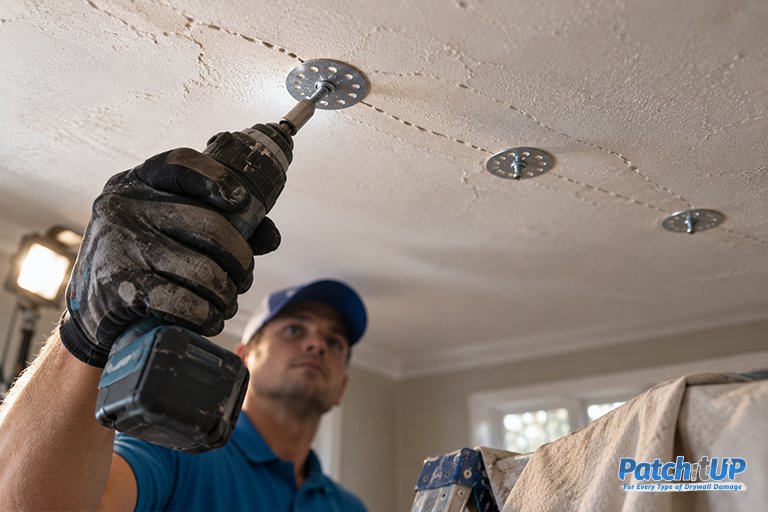
Where the plaster has gone soft, crumbly, or wet, that section comes out and gets rebuilt in coats over new lath. Honest trade-offs:
• Reattachment: keeps your original ceiling, creates far less mess, and only works if the plaster itself is sound.
• Cut out and replaster: the durable answer for water-ruined areas, but dustier and slower to cure.
One Charlotte-specific caution: if your home predates 1978, the paint on that ceiling may contain lead, and the EPA warns that sanding or demolishing painted surfaces creates toxic dust. That’s a real reason to hire out the demo rather than open it up on a Saturday.
What does a brown stain on a plaster ceiling actually mean?
Brown and yellow rings are water that has already passed through. Around here, the usual suspects are a roof flashing leak, a second-floor bathroom, or an air handler in a hot attic dripping condensate on one spot for weeks.
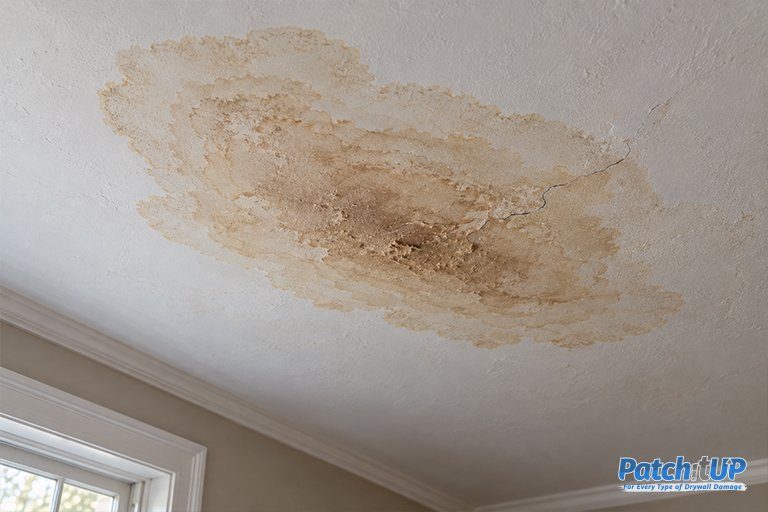
You have to cut off the moisture at the source first. “The National Park Service states that interior sealants or coatings will not work if moisture continues to enter.” Painting a ring over active leakage will mean painting the same ring again next month.
Why PatchitUP of Charlotte, NC
Charlotte has eight local historic districts, including Dilworth, Fourth Ward, Plaza Midwood, Wesley Heights, and Wilmore, and those blocks are full of original lath-and-plaster ceilings. Good news for owners: the city’s Certificate of Appropriateness applies to exterior work, so you don’t need commission approval for interior plaster repair before you start.

We work across Central Charlotte, North and South Charlotte, East Charlotte, Huntersville, and out to Indian Trail. Local crews know which of these ceilings are worth saving and which are past it, and we’ll tell you which one you have before any tools come out.
Ready for plaster repair in Charlotte, NC? Call PatchitUP at (704) 255-4154 for a free estimate, and stay out from under that bulge until we’ve looked at it.
3. FAQ
Apply FAQPage schema to this section.
Q: Is it dangerous to have a sagging plaster ceiling?
It can be. The piece of plaster that has separated from the lath can weigh a lot, and it may fall without warning, injuring anyone standing below. If you notice even the slightest movement in your ceiling, avoid entering the room until a professional inspects and evaluates it.
Can I fix a plaster ceiling without taking it down?
Yes, if possible. If it’s loose but not crumbling, you can push it back and secure it to the joists with screws and plaster washers. You must cut and rebuild the ceiling if it is wet, crumbling, or cracking into pieces.
Why does the crack in my plaster ceiling always appear again?
Wood lath shrinks and swells with changing humidity levels; hence, a crack, which had been covered up only with the compound, tends to appear again in the same place. You should bridge the crack with tape or mesh to stop movement in the area above it.
Do I have to replace my plaster ceiling with drywall?
In some situations, yes, but not necessarily. Original plaster is thicker, quieter, and more characteristic of an old house than drywall; therefore, it can be saved if your lath is still in good condition. However, drywall is more appropriate for a larger damaged area.